
28 Aug 2026
Boulders returning to the River Wye at Llangurig as part of major river restoration project
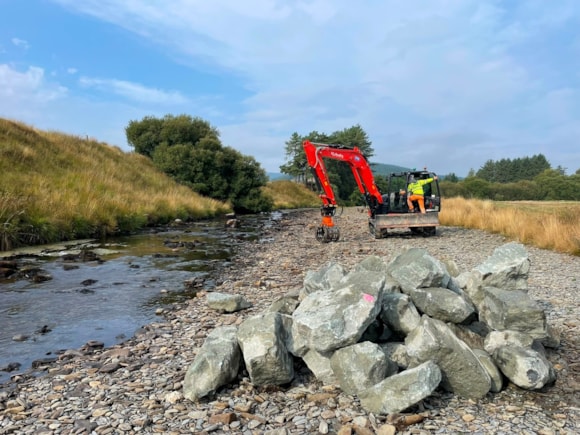
NR-28/08/26-DWS-WYE
Natural Resources Wales (NRW) is beginning work to reintroduce boulders to sections of the River Wye at Llangurig, as part of a major river restoration project designed to improve river habitat, support wildlife and help restore more natural river processes.
Boulders are a natural feature of the River Wye in this area, but many have been removed from the river over time for various reasons. However, boulders play an important role in healthy river systems, creating different flow patterns and providing pools, shelter and habitat for fish and aquatic invertebrates.
The stretch of river being restored is particularly important for Atlantic salmon and trout, providing spawning habitat as well as areas where young parr can shelter and grow. Salmon especially need to be robust before migrating downstream to sea.
Surveys carried out by the project team have found salmon and trout parr in areas where boulders remain present, while numbers are much lower in sections where boulders have been removed. The project team will continue monitoring the river following the work to assess how the river responds and measure changes in habitat and wildlife.
The boulder reintroduction complements wider work already being delivered with farmers and landowners around Llangurig, including planting riverside trees to provide further shelter and shade. Together, these measures will help reduce soil, nutrients and pollutants entering the river and support more resilient farming and river systems in the face of extreme weather.
Brendan Adair, Project Manager for the Upper Wye Catchment Restoration Project, said:
"We've spent the last two years building a detailed understanding of this stretch of river through surveys and monitoring, so we can target the work where it has the greatest benefit. We're particularly interested in how the reintroduction of boulders can improve survival rates for young Atlantic salmon, a key species that needs all the support we can provide.
This work sits alongside the wider changes we're making with farmers and landowners around Llangurig. By tackling pressures both within the river and across the surrounding catchment, we can build a healthier and more resilient River Wye for the future."
The work forms part of NRW's Upper Wye Catchment Restoration Project, which is working with farmers, landowners and local organisations to address the pressures affecting the River Wye Special Area of Conservation (SAC), restore habitats, improve water quality and build resilience to climate change.
...................................................................................................................................................................
Clogfeini’n dychwelyd i Afon Gwy yn Llangurig fel rhan o brosiect mawr i adfer yr afon
Mae Cyfoeth Naturiol Cymru (CNC) yn dechrau gwaith i ailgyflwyno clogfeini i rannau o Afon Gwy yn Llangurig, fel rhan o brosiect adfer afon sydd â’r nod o wella cynefinoedd yr afon, cefnogi bywyd gwyllt a helpu i adfer prosesau naturiol yn yr afon.
Mae clogfeini’n un o nodweddion naturiol Afon Gwy yn yr ardal hon, ond mae llawer wedi cael eu tynnu o'r afon dros amser am wahanol resymau. Fodd bynnag, mae clogfeini’n chwarae rhan bwysig mewn systemau afonydd iach, gan greu patrymau llif amrywiol a darparu pyllau, lloches a chynefin i bysgod ac infertebratau dyfrol.
Mae'r darn o afon sy'n cael ei adfer yn arbennig o bwysig i eogiaid a brithyllod, gan ddarparu cynefin silio yn ogystal ag ardaloedd lle gall pariaid gysgodi a thyfu. Mae angen i eogiaid yn arbennig fod yn wydn cyn mudo i lawr yr afon i'r môr.
Mae arolygon a gynhaliwyd gan dîm y prosiect wedi canfod pariaid eogiaid a brithyllod mewn ardaloedd lle mae clogfeini yn parhau i fod yn bresennol, tra bod y niferoedd yn llawer is mewn rhannau lle mae clogfeini wedi'u symud. Bydd tîm y prosiect yn parhau i fonitro'r afon yn dilyn y gwaith i asesu sut mae'r afon yn ymateb a mesur newidiadau o ran cynefin a bywyd gwyllt.
Mae ailgyflwyno’r clogfeini yn ategu gwaith ehangach sydd eisoes yn cael ei wneud gyda ffermwyr a thirfeddianwyr o amgylch Llangurig, gan gynnwys plannu coed ar lan yr afon i ddarparu mwy o loches a chysgod. Gyda'i gilydd, bydd y mesurau hyn yn helpu i leihau pridd, maethynnau a llygryddion sy'n mynd i mewn i'r afon ac yn cefnogi systemau ffermio ac afonydd mwy gwydn yn wyneb tywydd eithafol.
Dywedodd Brendan Adair, Rheolwr Prosiect ar gyfer Prosiect Adfer Dalgylch Gwy Uchaf:
"Rydym wedi treulio'r ddwy flynedd ddiwethaf yn meithrin dealltwriaeth fanwl o'r darn hwn o afon drwy arolygon a monitro, fel y gallwn dargedu'r gwaith lle mae'n cael y budd mwyaf. Mae gennym ddiddordeb arbennig mewn sut y gall ailgyflwyno clogfeini wella cyfraddau goroesi eogiaid ifanc, rhywogaeth allweddol sydd angen yr holl gefnogaeth y gallwn ei darparu.
Mae'r gwaith hwn yn cyd-fynd â'r newidiadau ehangach rydyn ni'n eu gwneud gyda ffermwyr a thirfeddianwyr o amgylch Llangurig. Drwy fynd i'r afael â phwysau o fewn yr afon ac ar draws y dalgylch cyfagos, gallwn adeiladu Afon Gwy iachach a mwy gwydn ar gyfer y dyfodol."
Mae'r gwaith yn rhan o Brosiect Adfer Dalgylch Gwy Uchaf CNC, sy'n gweithio gyda ffermwyr, tirfeddianwyr a sefydliadau lleol i fynd i'r afael â'r pwysau sy'n effeithio ar Ardal Cadwraeth Arbennig (ACA) Afon Gwy, adfer cynefinoedd, gwella ansawdd dŵr a meithrin y gallu i wrthsefyll newid hinsawdd.
Contact Information
Communications Team
Natural Resources Wales
cyfathrebu@cyfoethnaturiolcymru.gov.uk
Notes to editors
Notes to editors
- The Upper Wye Catchment Restoration Project #RestoreUpperWye is funded by the Welsh Government's Nature and Climate Emergency Fund to restore the condition of the upper River Wye Special Area of Conservation (SAC).
- The overall aim of the project is to protect species and enhance habitats by addressing a range of pressures affecting the river. Focus areas include the headwaters of the Upper Wye, Rivers Irfon, Ithon and Marteg.
- The Upper Wye Catchment Restoration Project works with farmers and landowners to identify practical land management changes that can improve water quality, reduce soil and nutrient loss, enhance habitats and build resilience to climate change.
For media enquiries, images or interviews, please contact:
Upper Wye Catchment Restoration Project
RestoreUpperWye@naturalresources.wales
...................................................................................................................................................................
Nodiadau i olygyddion
- Mae Prosiect Adfer Dalgylch Gwy Uchaf #AdferGwyUchaf wedi'i ariannu gan Gronfa Argyfwng Natur a Hinsawdd Llywodraeth Cymru i adfer cyflwr Ardal Cadwraeth Arbennig (ACA) rhan uchaf Afon Gwy.
- Nod cyffredinol y prosiect yw gwarchod rhywogaethau a gwella cynefinoedd drwy fynd i’r afael â nifer o wahanol ffactorau sy’n effeithio ar yr afon. Mae'r ardaloedd dan sylw yn cynnwys blaenddyfroedd Gwy Uchaf, ac afonydd Irfon, Ieithon a Marteg.
- Mae Prosiect Adfer Dalgylch Gwy Uchaf yn gweithio gyda ffermwyr a thirfeddianwyr i nodi newidiadau ymarferol i reoli tir a all wella ansawdd dŵr, lleihau colledion o ran pridd a maethynnau, gwella cynefinoedd a meithrin y gallu i wrthsefyll newid hinsawdd.
Ar gyfer ymholiadau’r cyfryngau, cyfweliadau neu ddelweddau, cysylltwch â:
Prosiect Adfer Dalgylch Gwy Uchaf
AdferGwyUchaf@cyfoethnaturiol.cymru

Powered by Onclusive PR Manager © 2026